
Listen Live
Pause
Sorry, no results.
Please try another keyword


Leo was born in Sicily in the seventh century, and was known for both his piety and his excellent training in languages, music, and many other subjects. In the year of Our Lord 681 Leo was elected to succeed Pope St. Agatho, but his consecration was delayed for over a year and a half, due to an ongoing negotiation between Rome and the Byzantine Emperor regarding papal elections. Leo’s actual reign was even shorter than the delay between his election and consecration. Most notably, he confirmed the decrees of the Sixth Ecumenical Council, also known as the Third Council of Constantinople, which was held just before his pontificate. This council anathematized the Monothelite heresy, and famously included a censure of Pope Honorius, who had failed to actively suppress Monothelitism, and even worse had caused grave scandal in seeming to favor the heresy by his silence. Leo also reaffirmed the authority and jurisdiction of the papacy, contributed to reforming Gregorian chant, and composed several new hymns himself. He died in the year of Our Lord 683.
AT Alexandria, St. Tryphon, and twelve other martyrs.
At Constantinople, the holy martyrs Eulogius and his companions.
At Caesarea, in Cappadocia, St. Hyacinthus, chamberlain of the emperor Trajan. Accused of being a Christian, he was scourged and thrown into prison, where, consumed with hunger, he breathed his last.
At Chiusi, in Tuscany, in the reign of the emperor Trajan, the holy martyrs Irenaeus, deacon, and Mustiola, a matron, who were subjected to various atrocious tortures and merited the crown of martyrdom. The same day, the holy martyrs Mark and Mucian, who were put to the sword for Christ. As a small boy cried out to them not to sacrifice to idols, he was whipped, but confessing Christ all the more vigorously, he was killed with a man named Paul, who had also exhorted the martyrs.
At Laodicea, in Syria, St. Anatolius, a bishop, whose writings were admired not only by religious men, but even by philosophers.
At Altino, St. Heliodorus, a bishop distinguished for holiness and learning.
At Ravenna, St. Dathus, bishop and confessor.
At Edessa, in Mesopotamia, the translation of the apostle St. Thomas from India. His relics were afterwards taken to Tortona.
℣. And elsewhere many other holy martyrs, confessors, and holy virgins.
℟. Thanks be to God.
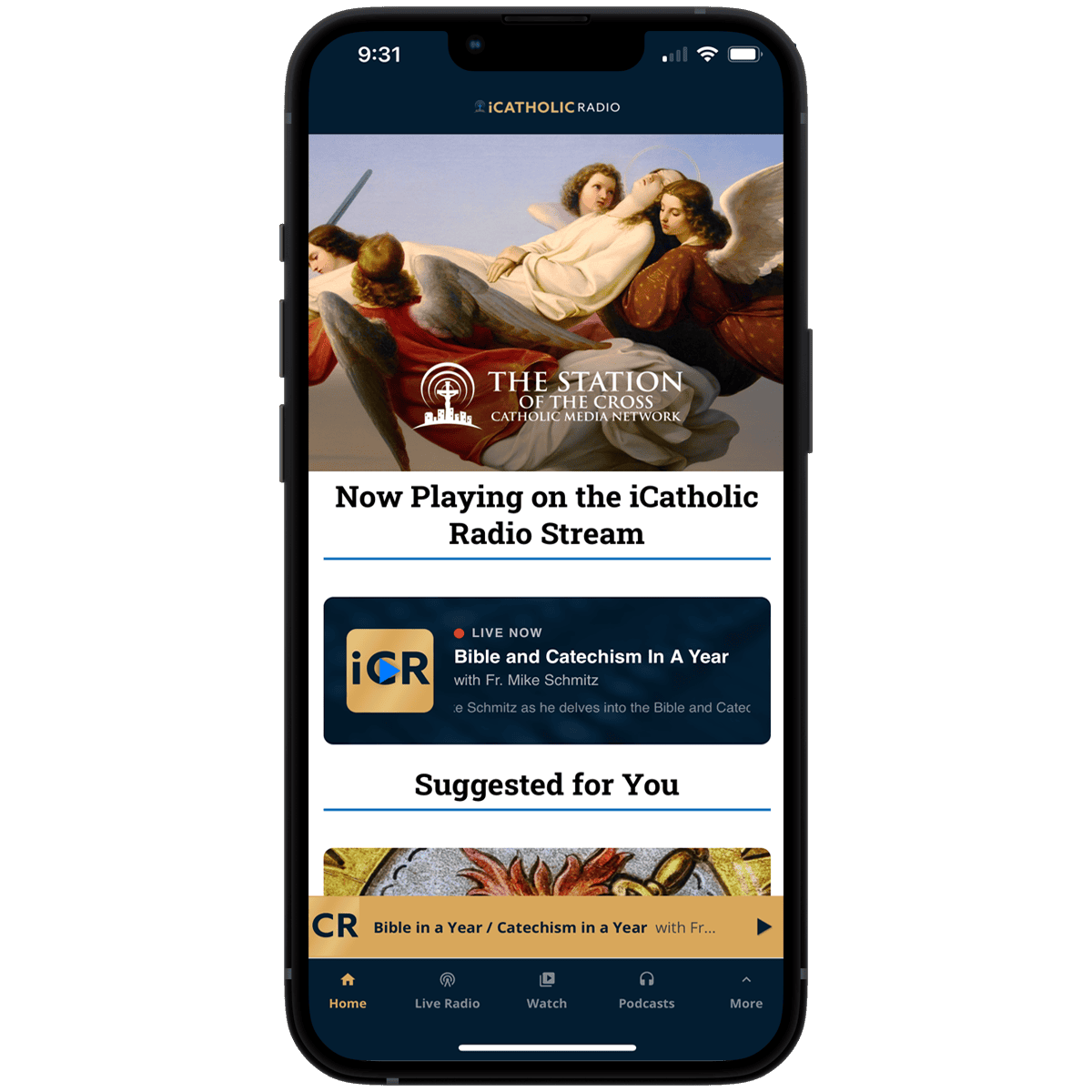
Catholic Radio, Anywhere
Faithful Catholic programming from morning to night. Watch or listen. Always free.
Get the App