

Listen Live
Pause
Sorry, no results.
Please try another keyword


November belongs to the Holy Souls in Purgatory. The Church opens the month by celebrating all the saints in Heaven on November 1, and the very next day she turns to pray for all the faithful departed who are still being made ready to see God face to face. On this page you will find the traditional prayers for the souls in purgatory, how to offer the Rosary and Holy Mass for the dead, the November indulgences for the Holy Souls, and what the Catechism teaches about purgatory.
The souls in purgatory are not lost. They died in God’s grace and friendship, and their salvation is certain. What remains is the last stage of their purification, the cleansing that makes a soul fully ready for the joy of Heaven. But they can no longer help themselves. The time for merit ended with their earthly lives, and now they wait on the charity of the Church still on earth. Our prayers, our sacrifices, and above all the Holy Sacrifice of the Mass can hasten the day they see God.
Death does not break the bond between the members of Christ’s Body. The Church in Heaven, the Church being purified, and the Church on earth remain one family, and every member can help the others.
Praying for the living and the dead is one of the traditional spiritual works of mercy, and the saints saw it as the summit of them all. St. Francis de Sales was known for teaching that one act of charity toward the Holy Souls gathers every other work of mercy into itself:
“To assist the souls in Purgatory is to perform the most excellent of the works of mercy, or rather it is to practice in a most sublime manner all the works of mercy together; it is to visit the sick; it is to give drink to those who thirst for the vision of God; it is to feed the hungry, to ransom prisoners, to clothe the naked, to procure for poor exiles the hospitality of the Heavenly Jerusalem; it is to comfort the afflicted, to instruct the ignorant — in fine, to practice all works of mercy in one.”
— St. Francis de Sales
There is a gift in it for us as well. A soul we help into Heaven does not forget us. St. Margaret Mary Alacoque, the great apostle of the Sacred Heart, urged the faithful to make praying for the Holy Souls part of every night’s prayer, offering the day’s work to Jesus on their behalf:
“In union with the divine Heart of Jesus make a short pilgrimage to Purgatory at night. Offer Him all your activities of the day and ask Him to apply His merits to the suffering souls. At the same time implore them to obtain for you the grace to live and die in the love and friendship of this divine Heart. May He never find in you any resistance to His holy will, nor any wish to thwart His designs in your regard. Fortunate will you be, if you succeed in obtaining deliverance for some of these imprisoned souls, for you will gain as many friends in heaven.”
— St. Margaret Mary Alacoque
Her “short pilgrimage” is simple enough for anyone. Before you sleep, offer the day’s prayers, work, and crosses to the Heart of Jesus for the souls in purgatory, and close with the Eternal Rest prayer below. Every night of November is a chance to help a poor soul in purgatory.
The month opens with two days that belong together. On November 1, the Solemnity of All Saints, the Church rejoices with the Church Triumphant, every soul who has reached the glory of Heaven. On November 2, the Commemoration of All the Faithful Departed, she prays for the Church Suffering, the souls still being purified.
Prayer for the dead is as old as the Church herself, but a single day for all the departed took shape in the monasteries of the Middle Ages. Around the year 998, St. Odilo, abbot of Cluny, directed the monasteries under his care to pray for all the faithful departed on the day after All Saints. The custom spread across Christendom and was eventually adopted by Rome for the whole Church. In 1915, during the First World War, Pope Benedict XV granted every priest the privilege of offering three Masses on All Souls’ Day for the dead, a privilege the Church still keeps.
All Saints once had an octave, eight days of celebration from November 1 through November 8. The octave was removed from the calendar in 1955, but its memory survives in the Church’s indulgences: the plenary indulgence for visiting a cemetery is still granted on each of those first eight days. From there, the devotion naturally filled the rest of the month, as the season’s dying leaves and shortening days turn the heart toward the last things.
These are the Church’s oldest and simplest prayers for the dead. They are short enough to pray at a graveside, in the car, or at the end of night prayers, and they can be offered for a particular loved one or for all the souls in purgatory.
Pray this whenever you pass a cemetery, hear of a death, or remember someone who has died. The Church attaches a partial indulgence to it, applicable only to the souls in purgatory.
V. Eternal rest grant unto them, O Lord,
R. And let perpetual light shine upon them.
V. May they rest in peace.
R. Amen.
May their souls, and the souls of all the faithful departed, through the mercy of God, rest in peace. Amen.
For centuries the Church has prayed Psalm 130 (Psalm 129 in older numbering) for the dead. It is the cry of a soul waiting for the Lord, and it is traditionally prayed with the Eternal Rest in place of the Glory Be, followed by the collect for the faithful departed.
Out of the depths I have cried unto Thee, O Lord;
Lord, hear my voice.
Let Thine ears be attentive
to the voice of my supplication.
If Thou, O Lord, shalt mark iniquities,
Lord, who shall endure it?
For with Thee there is merciful forgiveness;
and by reason of Thy law I have waited for Thee, O Lord.
My soul hath relied on His word;
my soul hath hoped in the Lord.
From the morning watch even until night,
let Israel hope in the Lord.
For with the Lord there is mercy,
and with Him plentiful redemption.
And He shall redeem Israel
from all his iniquities.
V. Eternal rest grant unto them, O Lord,
R. And let perpetual light shine upon them.
V. May they rest in peace.
R. Amen.
V. O Lord, hear my prayer.
R. And let my cry come unto Thee.
Let us pray. O God, the Creator and Redeemer of all the faithful, grant to the souls of Thy servants departed the remission of all their sins, that through our pious supplications they may obtain the pardon which they have always desired. Who livest and reignest, world without end. Amen.
No prayer helps the Holy Souls more than the Holy Sacrifice of the Mass. In every Mass, Christ’s one sacrifice on Calvary is made present, and the Church has offered it for the dead since her earliest days, so that they may be fully purified and enter the vision of God. Offering a Mass for someone who has died is one of the greatest gifts you can give them.
To have a Mass said, contact your parish office and ask to request a Mass intention for the deceased person by name. It is customary to make a small offering, called a stipend, when you request the Mass. Many Catholics arrange Masses on the anniversary of a loved one’s death, on their birthday, or during November. Some families also arrange Gregorian Masses, an ancient practice of thirty Masses offered on thirty consecutive days for one soul.
You can also offer your own participation at Mass for the Holy Souls. Unite your Holy Communion to that intention, and attend daily Mass during November when you can. If you are homebound, you can join the daily Mass on iCatholicRadio and make a spiritual communion for the souls in purgatory.
Join the daily Mass on iCatholicRadio →
The Rosary is a powerful prayer to offer for the dead, because it places them in the hands of the Mother of Mercy. Before you begin, simply state your intention: “I offer this Rosary for the soul of [name],” or “for the souls in purgatory, especially the most forgotten.” After each decade, add the Eternal Rest in place of, or alongside, the Fatima Prayer.
When the Rosary is prayed in a church or oratory, or together as a family or religious community, the Church grants a plenary indulgence under the usual conditions, and like any indulgence it may be offered for the dead. Praying it on your own earns a partial indulgence.
Pray along with the audio Rosary and chaplets from iCatholicRadio, or join our live Holy Hour every day at 3 PM, the Hour of Mercy, and offer it for the Holy Souls.
Pray the Rosary and chaplets with iCatholicRadio →
Join the 3 PM Holy Hour →
An indulgence is the remission, before God, of the temporal punishment still due to sins whose guilt has already been forgiven. A partial indulgence removes part of that punishment; a plenary indulgence removes all of it. You cannot gain an indulgence for another living person, but you can offer it for the souls in purgatory. During the first days of November, the Church opens her treasury especially wide for them.
On each day from November 1 through November 8, a plenary indulgence, applicable only to the souls in purgatory, is granted to the faithful who devoutly visit a cemetery and pray for the dead, even if only mentally. On any other day of the year, the same visit earns a partial indulgence. A plenary indulgence can be gained only once a day, so you can help a soul each day of the octave.
On All Souls’ Day, Monday, November 2, a plenary indulgence, applicable only to the souls in purgatory, is granted to the faithful who devoutly visit a church or oratory and there pray one Our Father and the Creed. With the bishop’s permission, this indulgence may also be gained on the preceding or following Sunday or on the Solemnity of All Saints.
To gain a plenary indulgence, you must perform the work and also fulfill the usual conditions:
If any condition is not fully met, the indulgence is partial rather than plenary, and it still helps the poor souls.
The Catechism of the Catholic Church teaches that those who die in God’s grace and friendship, but are still imperfectly purified, are assured of their eternal salvation. After death they undergo a purification so as to achieve the holiness necessary to enter the joy of Heaven (CCC 1030). The Church calls this final purification of the elect purgatory, and it is entirely different from the punishment of the damned. The Church formulated this doctrine of faith especially at the Councils of Florence and Trent (CCC 1031).
The teaching rests on the Church’s ancient practice of praying for the dead, which Scripture itself records. From the beginning the Church has honored the memory of the dead and offered prayers for them, above all the Eucharistic sacrifice, and she also commends almsgiving, indulgences, and works of penance on their behalf (CCC 1032). Read the Catechism on purgatory (CCC 1030–1032) →
The word “purgatory” is not in Scripture, any more than the word “Trinity” is, but the reality is. In 2 Maccabees 12:46, Judas Maccabeus has sacrifices offered for fallen soldiers “that they might be delivered from their sin,” a prayer that would make no sense if the dead were beyond help. St. Paul writes that a man’s work will be tested by fire, and that he himself “shall be saved, yet so as by fire” (1 Corinthians 3:15). Our Lord speaks of sins that will not be forgiven “in this world, nor in the world to come” (Matthew 12:32), implying that some are forgiven after death. And Revelation 21:27 tells us that nothing unclean shall enter Heaven.
Yes, and purgatory is how Christ’s sacrifice finishes its work. Every soul in purgatory is saved by the merits of Jesus Christ alone. The Church distinguishes the guilt of sin, which God forgives, from the temporal punishment and the disordered attachments that sin leaves behind. Even forgiven sin wounds the soul, and those wounds must be healed before we can bear the full glory of God. Purgatory is not an addition to Christ’s redemption; it is His mercy completing in us what He began.
No. Purgatory is only for those who die in God’s grace and friendship. It is not a place where the unrepentant get another opportunity to choose God. Every soul in purgatory has already been saved and will certainly enter Heaven. That is why the Church can speak of purgatory with hope: it is the vestibule of Heaven, not a corridor of Hell.
The Church has never defined how long purification lasts, and earthly time may not apply to souls after death in the way we experience it. What we do know is that our prayers, sacrifices, Masses, and indulgences can shorten it. That is reason enough to keep praying for our dead long after their funerals, even for years.
Yes. Prayer for the dead appears in the earliest Christian inscriptions and liturgies. Christians of the second and third centuries offered the Eucharist on the anniversaries of the departed. St. Augustine recounts in his Confessions how his dying mother, St. Monica, asked only that he remember her at the altar of the Lord. St. John Chrysostom urged the faithful not to hesitate to help those who have died and to offer prayers for them, a teaching the Catechism itself cites (CCC 1032).
The Church teaches that our prayer for the dead is capable not only of helping them but also of making their intercession for us effective (CCC 958). Many saints, including St. Alphonsus Liguori, held that the Holy Souls can pray for those who help them, and once in Heaven they certainly do. Those we pray for today, may well become our friends and intercessors tomorrow.
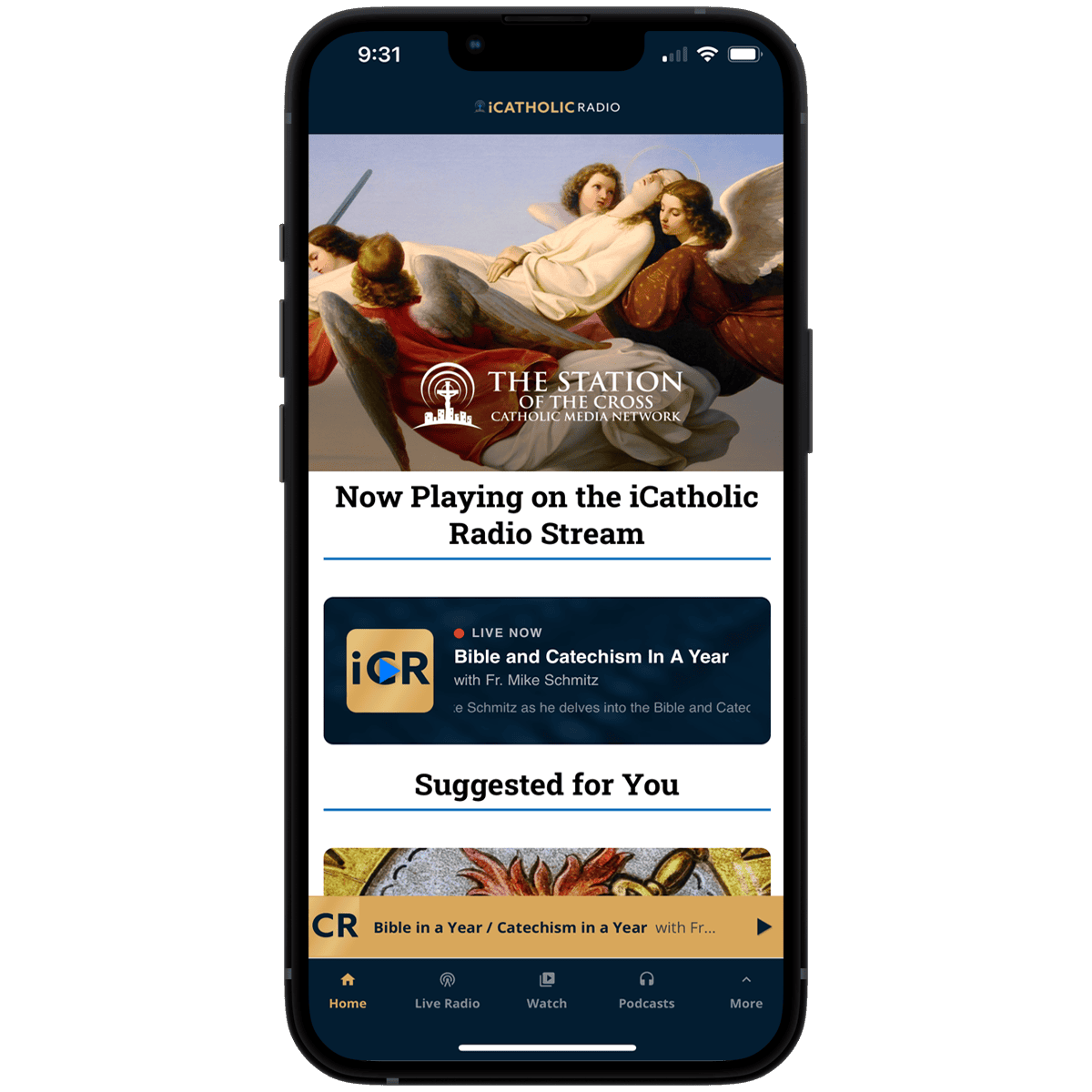
Catholic Radio, Anywhere
Faithful Catholic programming from morning to night. Watch or listen. Always free.
Get the App