
Listen Live
Pause
Sorry, no results.
Please try another keyword


The Birth of the Blessed Virgin Mary is, fittingly, one of only three earthly nativities commemorated in the Church’s calendar, along with those of Our Lord Himself and St. John the Baptist. Our Lady was conceived immaculate, with no stain of original sin, and ancient tradition relates that St. John was cleansed from original sin within the womb of his mother St. Elizabeth at the time of the Visitation. Thus their sinless births deserve to be especially honored alongside the great Nativity of the Savior. The feast of Our Lady’s Nativity was first documented in the sixth century, and may have originated as early as the fifth. The Western Church was slower to adopt the celebration, compared to the East, but by the twelfth century the feast was prominent enough to be called “Latter Marymass,” as it followed not long after the feast of the Assumption, and it was eventually given an octave. The date, September 8th, was that of the dedication of a church in Jerusalem in honor of Our Lady, though other traditional explanations in the West relate miraculous confirmations, usually by angels, of the accuracy of the date. Many agricultural blessings are associated with this day, especially of seeds and seedlings.
THE Nativity of the most Blessed and ever Virgin Mary, Mother of God.
At Nicomedia, St. Adrian, with twenty -three other martyrs, who ended their martyrdom the 4th of March by having their limbs crushed, after enduring many torments under the emperors Diocletian and Maximian. Their remains were carried to Byzantium by the Christians, and buried with due honors. Afterwards the body of St. Adrian was taken to Rome on this day, on which his festival is celebrated.
At Alexandria, the holy martyrs Ammon, Theophilus, Neoterius, and twenty-two others.
At Antioch, the Saints Timothy and Faustus, martyrs.
At Gaza, in Palestine, the holy martyrs Eusebius, Nestabus, and Zeno, brothers, who were cut to pieces by a multitude of Pagans that rushed upon them, in the time of Julian the Apostate.
In the same place, and under the same Julian, St. Nestor, martyr, who, being most cruelly tortured by the same furious Gentiles, breathed his last.
At Valencia, in Spain, St. Thomas of Villanova, archbishop, distinguished by his ardent charity for the poor. He was inscribed among the saints by Alexander VII, and his feast is celebrated on the 22d of this month.
At Freisingen, St. Corbinian, first bishop of that city. Being consecrated by pope Gregory II, and sent to preach the Gospel, he reaped an abundant harvest in France and Germany, and finally renowned for virtues and miracles, rested in peace.
℣. And elsewhere many other holy martyrs, confessors, and holy virgins.
℟. Thanks be to God.
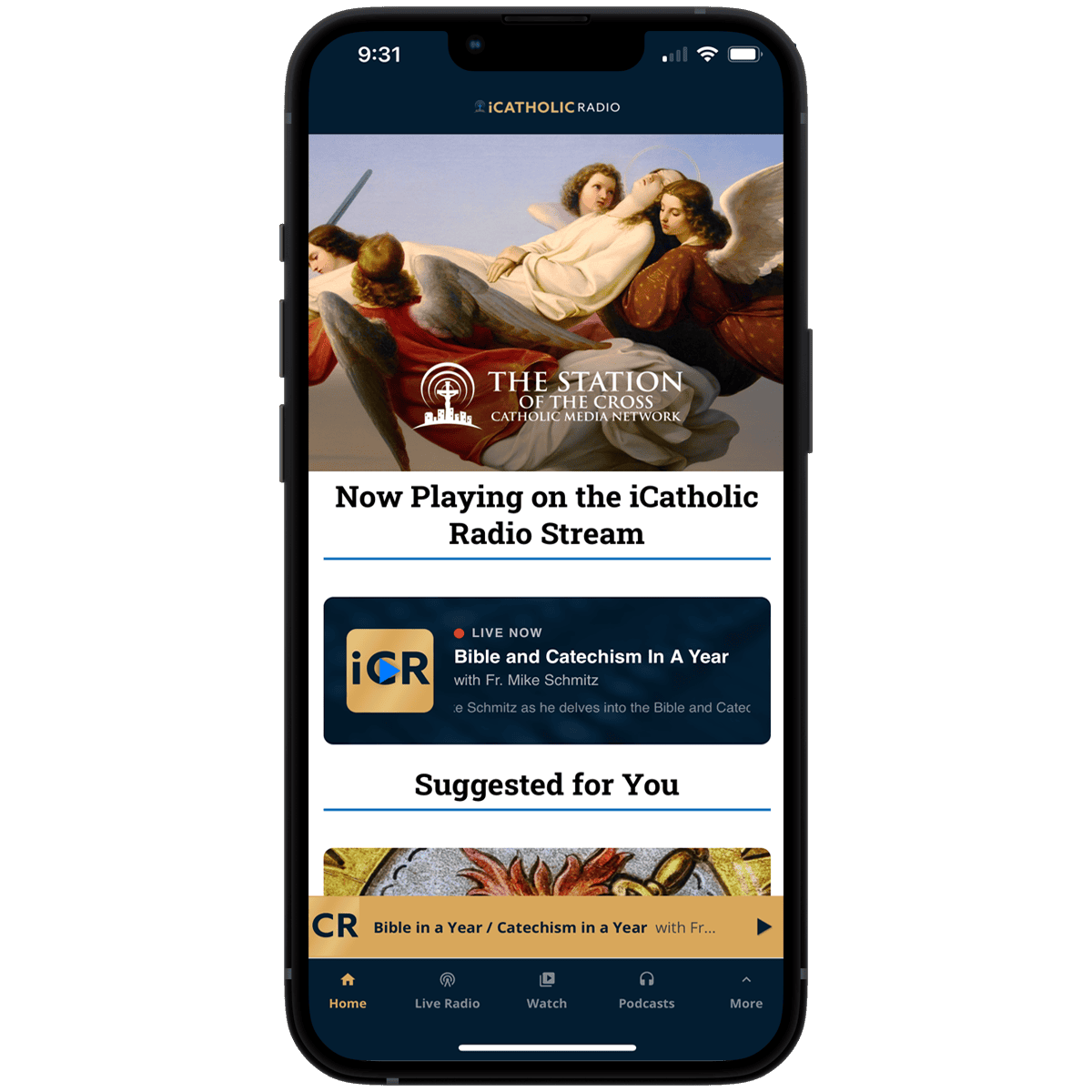
Catholic Radio, Anywhere
Faithful Catholic programming from morning to night. Watch or listen. Always free.
Get the App