
Listen Live
Pause
Sorry, no results.
Please try another keyword

Paulinus was born in the late sixth century and served as a monk in Rome. In the year of Our Lord 601, Paulinus and eleven others were sent to England by Pope St. Gregory the Great to assist St. Augustine of Canterbury with the evangelization of Britain. After over two decades of relative obscurity, Paulinus was called upon by the Christian King Eadbald of Kent to accompany his sister St. Ethelburga, whom the pagan King Edwin of Northumbria had demanded in marriage. Edwin promised religious freedom to the princess and her household, and claimed an openness to studying the faith himself. Paulinus was ordained bishop, and though his missionary efforts in Northumbria were stymied at first, he and Queen Ethelburga eventually converted Edwin, much as Ethelburga’s mother, Queen St. Bertha, had converted her husband, King St. Ethelbert. Edwin called for the conversion of his court and subjects, many of whom, including St. Hilda of Whitby, were baptized the same Easter Sunday as the king, in the year of Our Lord 627. Paulinus served as Bishop of York until King St. Edwin died a martyr’s death in battle with the pagans. Paulinus then returned to Kent, where he was made Bishop of Rochester. He died there in the year of Our Lord 644.
AT Rome, blessed John Leonardi, confessor, founder of the Congregation of Clerks Regular of the Mother of God. He was illustrious by his labors and miracles, and through his instrumentality missions were established by the Propaganda.
In the island of Crete, blessed Pinytus, most noble among the bishops. He was bishop of Gnosia, and flourished under Marcus Antoninus Verus and Lucius Aurelius Commodus. He left in his writings, as in a mirror, a vivid delineation of himself.
At Cologne, in the persecution of Maximian, St. Gereon, martyr, with three hundred and eighteen others, who patiently bowed their necks to the sword for the true religion.
In the neighborhood of the same city, the holy martyrs Victor and his companions.
At Bonn, in Germany, the holy martyrs Cassius and Florentius, with many others.
At Nicomedia, the holy martyrs Eulampius, and his sister, the virgin Eulampia, who, hearing that her brother was tortured for Christ, rushed through the crowd, embraced him and became his companion. Both were cast into a caldron of boiling oil, but being quite uninjured, they terminated their martyrdom by decapitation with two hundred others, who, impressed by the miracle, had believed in Christ.
At York, in England, the holy bishop Paulinus, disciple of the blessed pope Gregory. Being sent thither by that pope with others to preach the Gospel, he converted king Edwin and his people to the faith of Christ.
At Piombino, in Tuscany, St. Cerbonius, bishop and confessor, who, as St. Gregory relates, was renowned for miracles, both during life and after death.
At Verona, another St. Cerbonius, bishop.
At Capua, St. Paulinus, bishop.
At Rome, St. Francis Borgia, Superior General of the Society of Jesus, celebrated for the austerity of his life, the gift of prayer, and for the firmness with which he renounced the dignities of the world, and refused those of the Church.
℣. And elsewhere many other holy martyrs, confessors, and holy virgins.
℟. Thanks be to God.
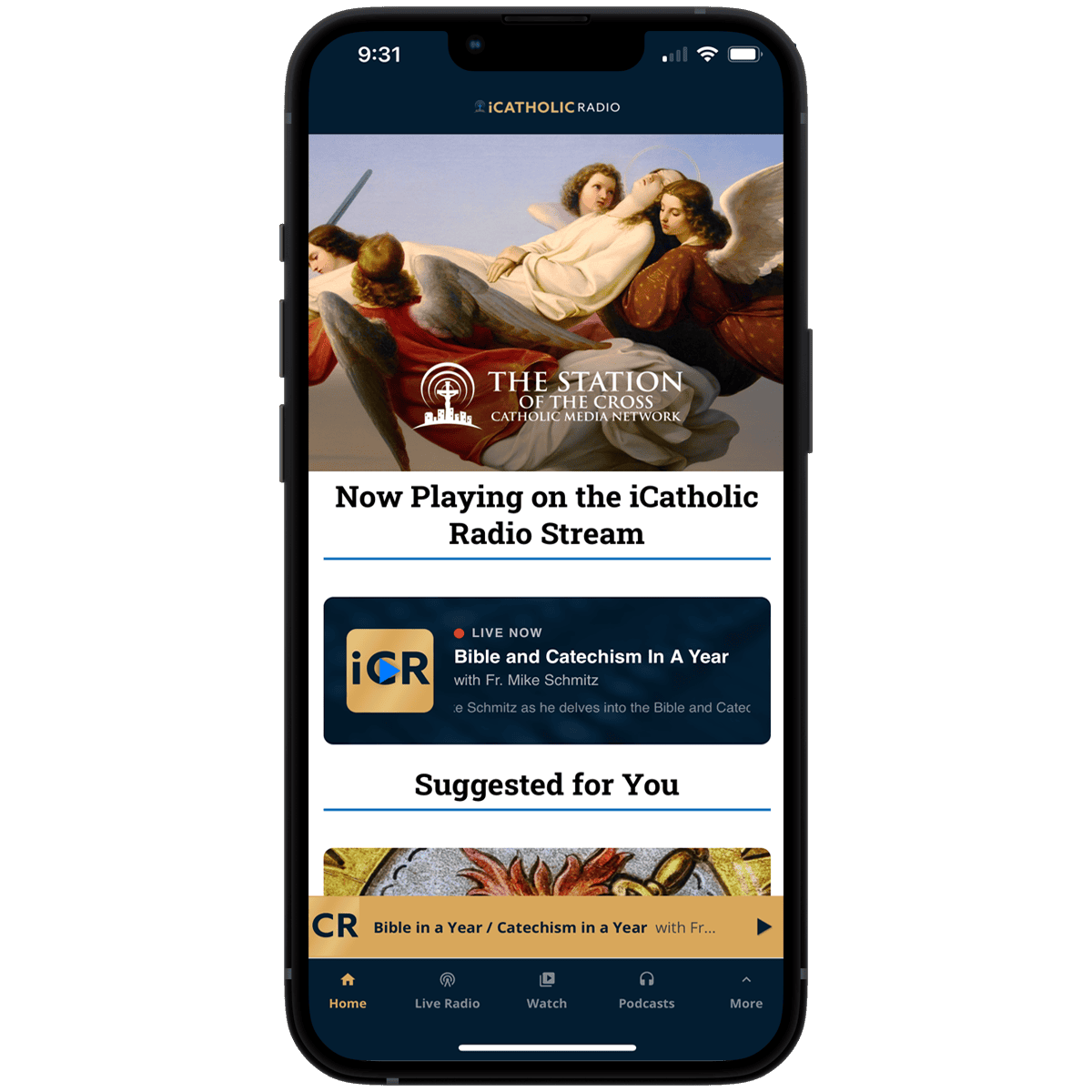
Catholic Radio, Anywhere
Faithful Catholic programming from morning to night. Watch or listen. Always free.
Get the App