
Listen Live
Pause
Sorry, no results.
Please try another keyword

Bernard was born to a French noble family around the year of Our Lord 1090. He was so devoted to chastity that he once threw himself into an icy pond to avoid temptation. Alongside thirty fellow noblemen, Bernard entered the Benedictine monastery at Citeaux under the abbot St. Stephen Harding. A few years later Bernard was sent to begin a new monastery, which he named Clairvaux. Though the rule Abbot Benedict and his monks followed was so strict that his superiors had to order a slight relaxation, Clairvaux soon attracted many vocations. Bernard’s brothers and widowed father all eventually joined him, and even his sister Bl. Humbeline gained her husband’s permission to retire to a Benedictine convent. Bernard was constantly called upon for counsel, and was even chosen to judge between two rival claimants to the papacy. Several times he refused to be made a bishop. When not involved in politics, preaching crusades, or working miracles, Bernard was a prodigious writer of theology, philosophy, and hymns. He died in the year of Our Lord 1153, and is known as “the Last of the Fathers” and as “the Mellifluous Doctor” for the honey-like sweetness of his writings, especially regarding Our Lady.
IN the territory of Langres, the demise of St. Bernard, first abbot of Clairvaux, illustrious for virtues, learning, and miracles. He was declared Doctor of the universal church by the Sovereign Pontiff, Pius VIII.
In Judea, the holy prophet Samuel, whose sacred relics (as is related by St. Jerome), were taken to Constantinople by the emperor Arcadius, and deposited near Septimus.
The same day, St. Lucius, senator, who was converted to the faith, on seeing the constancy of Theodore, bishop of Cyrene, during his martyrdom. He also converted the governor Dignian, with whom he set out for Cyprus, where, seeing other Christians crowned for the confession of the Lord, he offered himself voluntarily, and merited the same crown of martyrdom, by having his head struck off.
In Thrace, in the time of the governor Apellian, thirty-seven holy martyrs, who had their hands and feet cut off for the faith of Christ, and were cast into a burning furnace.
Also, the holy martyrs Severus, and the centurion Memnon, who, suffering the same kind of death, went victoriously to heaven.
At Cordova, during the persecution of the Arabs, the holy martyrs Leovigildus and Christopher, monks, who were thrust into prison for the defence of the Christian faith, and soon after, by being beheaded and cast into the fire, obtained the palm of martyrdom.
At Rome, blessed Porphyry, a man of God, who instructed the holy martyr Agapitus in the faith and doctrine of Christ.
In the island of Noirmoutiers, St. Philibert, abbot.
At Chinon, St. Maximus, confessor, disciple of the blessed bishop Martin.
On Mount Senario, in the diocese of Florence, blessed Manetius, confessor, one of the seven founders of the Order of the Servites of the Blessed Virgin Mary, who breathed his last whilst reciting hymns in her honor.
℣. And elsewhere many other holy martyrs, confessors, and holy virgins.
℟. Thanks be to God.
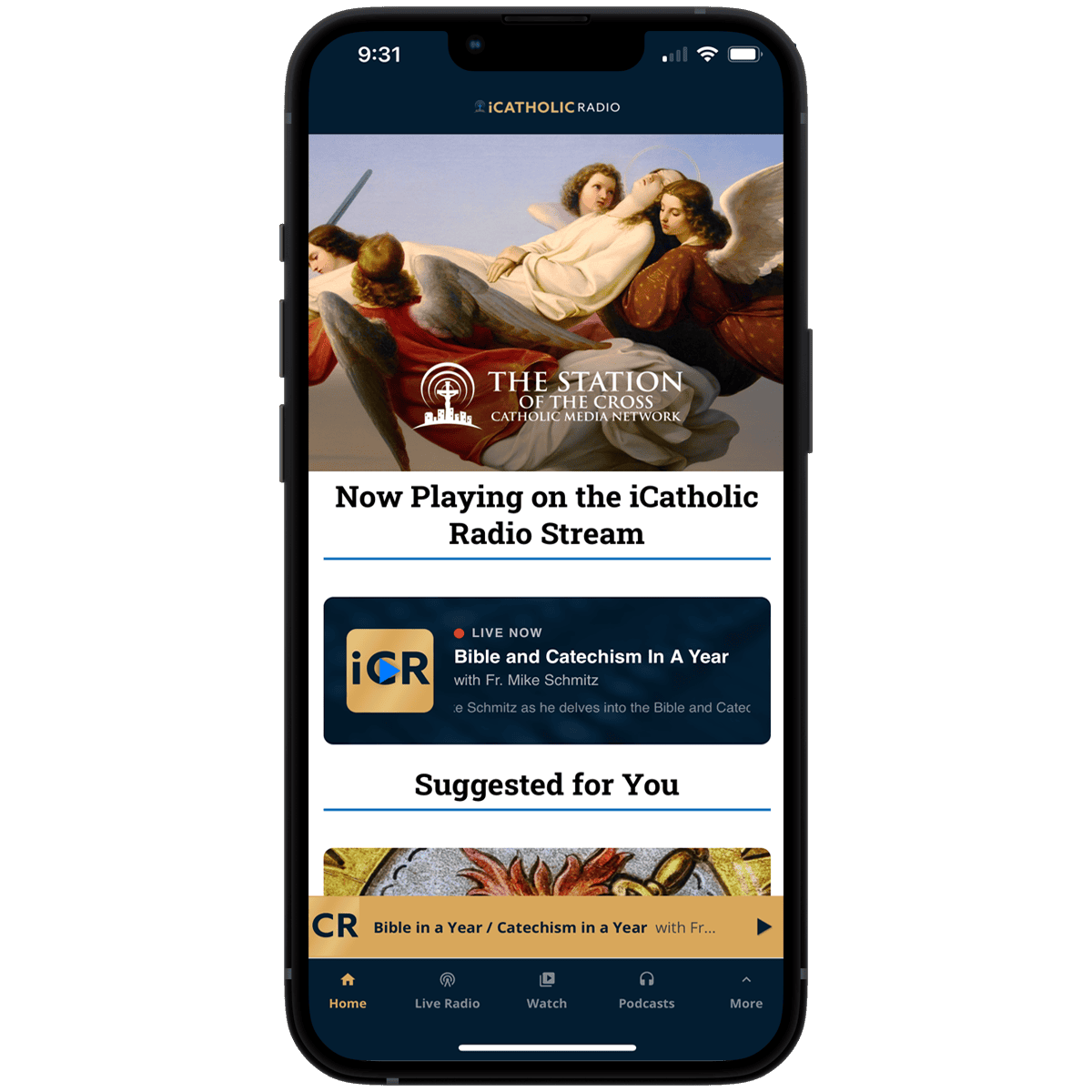
Catholic Radio, Anywhere
Faithful Catholic programming from morning to night. Watch or listen. Always free.
Get the App