

Listen Live
Pause
Sorry, no results.
Please try another keyword



Jan was born in the year of Our Lord 1599, the son of a Flemish cobbler in what is now Belgium. He displayed remarkable piety from an early age, and was especially devoted to serving at Holy Mass several times a week. Every Friday he would make the Stations of the Cross, barefoot, outdoors. Though his parents were initially opposed, Jan entered the Jesuits, hoping he would someday die a battlefield chaplain. After the death of his wife, Jan’s father even pursued the priesthood himself, though he passed away less than a year after his ordination. Having been made a subdeacon, Jan took his first vows and then travelled on foot to Rome to study philosophy. In August of the year of Our Lord 1621, Jan took part in a philosophical debate, then fell violently ill with a fever. The Jesuit Superior General and Cornelius a Lapide were among his visitors, as the whole school mourned their pious brother’s illness. Pure and saintly though he was, even he endured terrible temptations at the hour of death, exacerbated by his fever. Jan died on August 13th, clutching his crucifix, rosary and Jesuit rule book. Countless miracles have since been attributed to him. He is hailed as a patron of the youth, and especially of altar boys.
AT Rome, blessed Hippolytus, martyr, who gloriously confessed the faith, under the emperor Valerian. After enduring other torments, he was tied by the feet to the necks of wild horses, and being cruelly dragged through briars and brambles, and having all his body lacerated, he yielded up his spirit. On the same day, suffered also blessed Concordia, his nurse, who being scourged in his presence with leaded whips, went to our Lord; and nineteen others of his house, who were beheaded beyond the Tiburtine gate, and buried with him in the Veran field.
At Imola, the birthday [into heaven] of St. Cassian, martyr. As he refused to worship idols, the persecutor called the boys whom the saint taught and who hated him, giving them leave to kill him. The torment suffered by the martyr was the more grievous, as the hand which inflicted it, by reason of its weakness, rendered death more tardy.
At Todi, St. Cassian, bishop and martyr, under the emperor Diocletian.
At Burgos, in Spain, the Saints Centolla and Helena, martyrs.
At Constantinople, St. Maximus, a monk, distinguished for learning and for zeal for Catholic truth. Combating valiantly the Monothelites, he had his hands and tongue torn from him by the heretical emperor Constans, and was banished to Chersonesus, where he breathed his last. At this time, two of his disciples, both called Anastasius, and many others endured diverse torments and the hardships of exile.
In Germany, St. Wigbert, priest and confessor.
At Rome, St. John Berchmans, a scholastic of the Society of Jesus, illustrious for his innocence and for his fidelity to the rules of the religious life. He was canonized by Leo XIII.
At Poitiers, St. Radegundes, queen, whose life was renowned for miracles and virtues.
℣. And elsewhere many other holy martyrs, confessors, and holy virgins.
℟. Thanks be to God.
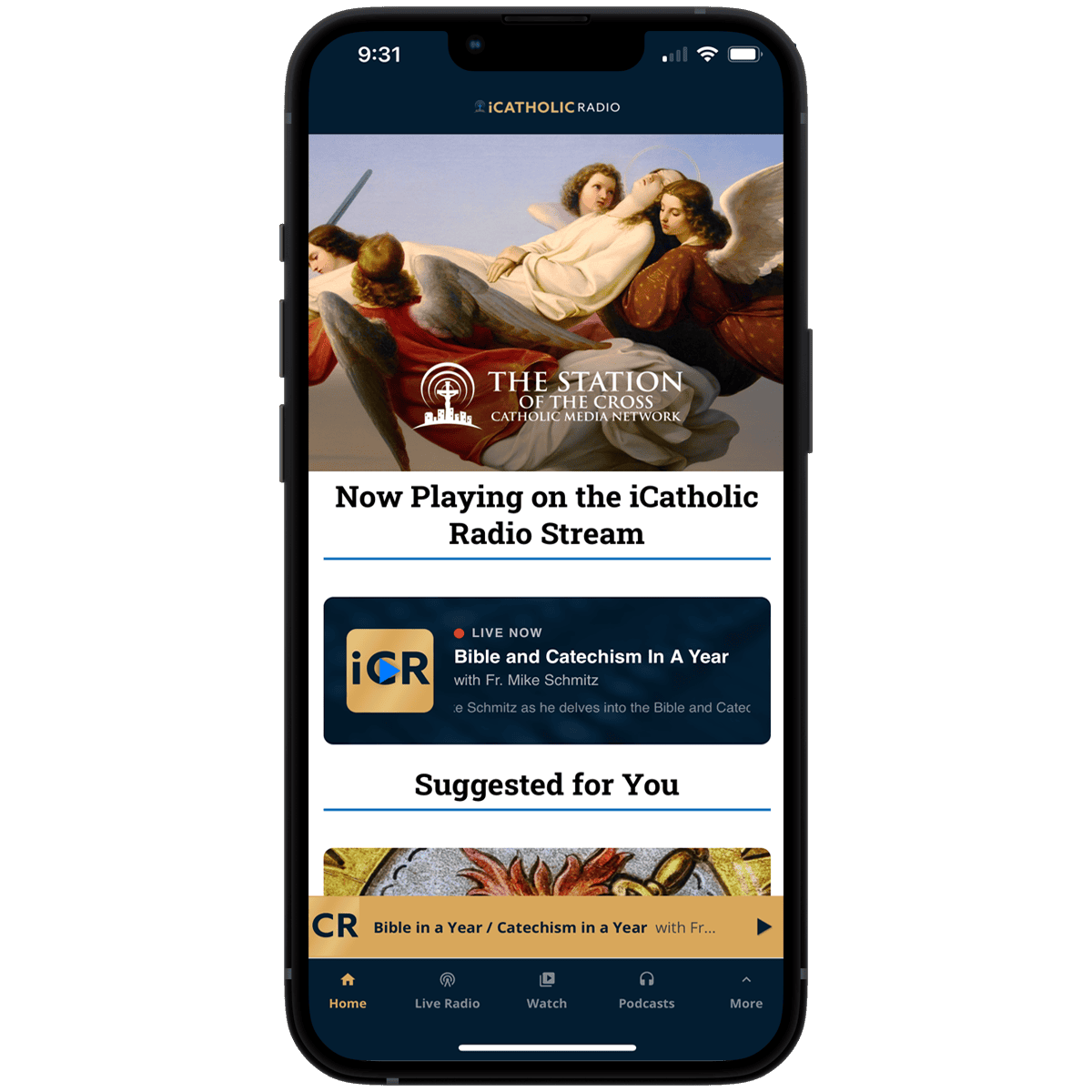
Catholic Radio, Anywhere
Faithful Catholic programming from morning to night. Watch or listen. Always free.
Get the App